
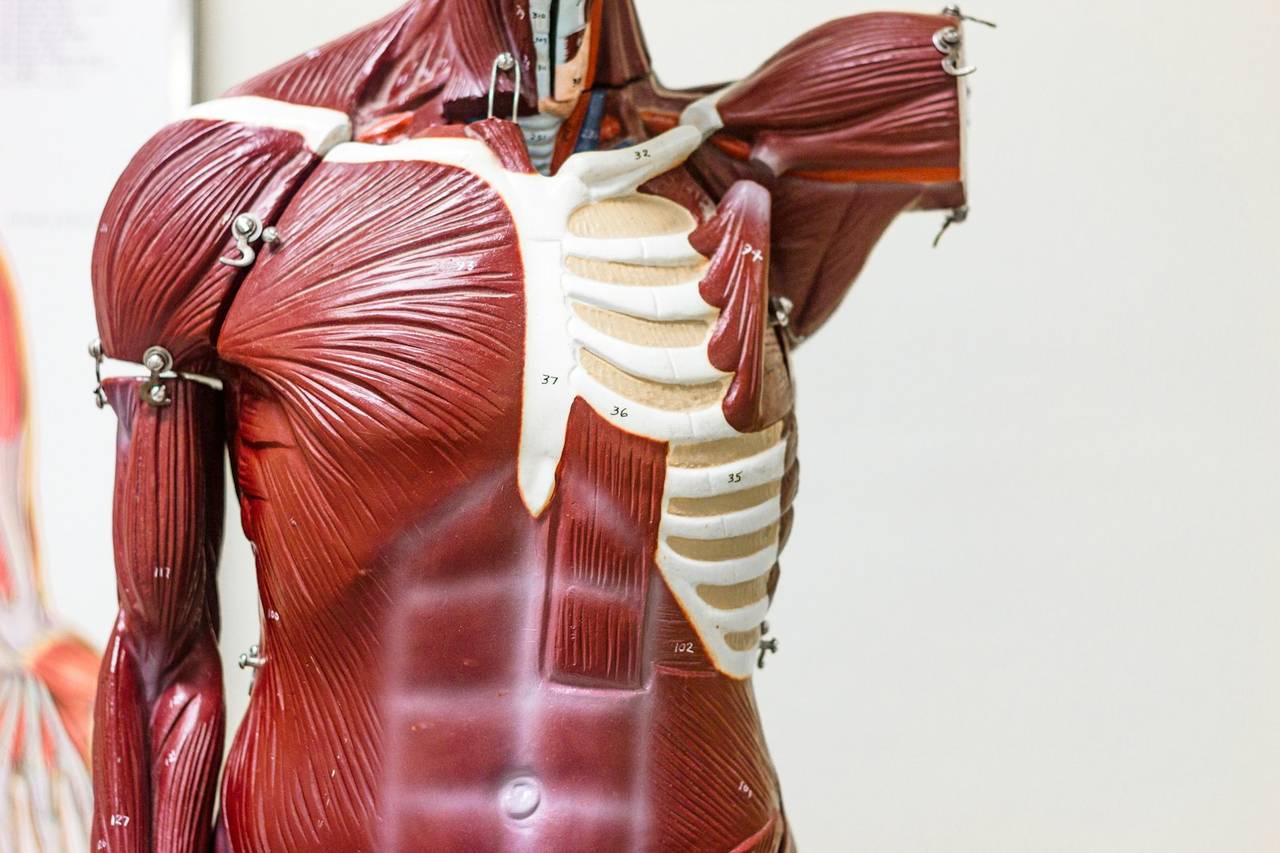
The Department of Basic Medical Sciences lays the scientific foundation of the BPT. In the curriculum's integrated design, the basic sciences take the most time in the first year and are linked throughout to their clinical use. Anatomy is taught as the "first language of medical science", with the musculoskeletal system in the most detail, while physiology and biochemistry focus on human movement, exercise and nutrition. In the second year, pathology, microbiology and pharmacology bridge the preclinical and clinical subjects, so students understand how disease develops, how infection is controlled and how medicines affect exercise and treatment.
Subjects we teach
BPT-101Human AnatomyYear 1 · Theory + Practical · 300 hoursThe structure of the body, with the muscles, joints, nerves and vessels of the limbs and spine in most detail, plus the thorax, abdomen, head and neck, embryology and neuroanatomy.
BPT-102Human PhysiologyYear 1 · Theory + Practical · 300 hoursHow the body works, from cells and tissues to the major systems, with emphasis on movement, the body's response and adaptation to exercise, and common physiological measurements.
BPT-103BiochemistryYear 1 · Theory · 90 hoursMetabolism of carbohydrates, lipids and proteins, enzymes, vitamins, minerals, hormones, nutrition and clinical biochemistry, and how exercise changes body chemistry.
BPT-201Pathology & MicrobiologyYear 2 · Theory · 120 hoursCell injury, inflammation, thrombosis and neoplasia; the pathogenesis of common conditions; microorganisms and immunity; and infection control, including keeping a sterile field.
BPT-202PharmacologyYear 2 · Theory · 90 hoursHow commonly used drugs act, how they affect exercise and movement, and the red and yellow flags a physiotherapist must recognise.
What you will learn
- Identify skeletal muscles and give their origin, insertion, nerve supply, actions and relations, and explain the joints and the muscles that move them
- Identify surface markings of joints, ligaments and muscles, and the gross structure of the heart, lungs, brain and spinal cord on specimens
- Explain the physiology of skeletal muscle contraction and of the cardiovascular, respiratory, musculoskeletal and nervous systems, including how they are regulated
- Carry out common physiological measurements, and explain how the body responds and adapts to exercise
- Explain the metabolism of carbohydrates, lipids and proteins, and apply exercise-related changes in body chemistry to exercise prescription
- Explain the key disease processes (cell injury, inflammation, thrombosis, neoplasia) and the mechanisms of infection and immunity
- Apply infection-control practices and set up a sterile field in physiotherapy practice
- Recognise drug-related red and yellow flags and how commonly prescribed drugs affect exercise and movement
Topics & clinical links
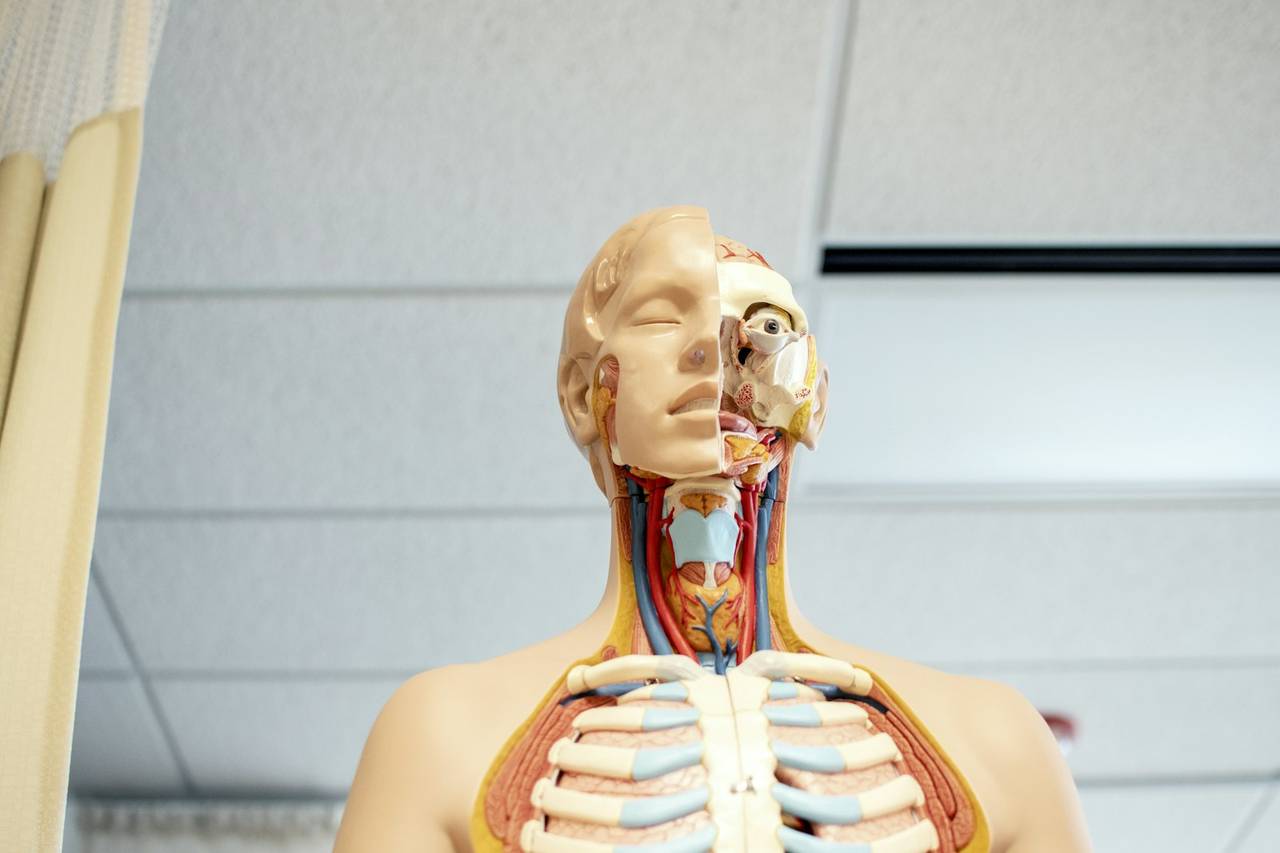
Basic sciences are taught with physiotherapy in view. These are the main areas covered and the clinical questions they prepare students to answer.
Anatomy
- General embryology
- Upper extremity
- Lower extremity
- Thorax
- Trunk and pelvis, including the pelvic floor
- Abdomen
- Endocrine glands
- Head and neck
- Neuroanatomy
Physiology & biochemistry
- Muscle and nerve
- Blood
- Cardiovascular system
- Respiratory system
- Digestive and renal systems
- Reproductive and endocrine systems
- Exercise physiology
- Metabolism and nutrition
- Clinical biochemistry
Links to clinical practice
- Common fracture sites
- Effects of nerve injury
- Pathogenesis of musculoskeletal conditions
- Cardiovascular and neurological disease
- Cancer conditions
- Hospital-acquired (nosocomial) infections
- Infection prevention
- Drugs for pain and inflammation
- Drugs in cardiovascular, respiratory, neurological and cancer care
Laboratories
The department teaches in two laboratories, equipped in line with the NCAHP minimum standards for the BPT.
Anatomy laboratory
A dissection facility, disarticulated bone sets including spine sets, and specimens and models of the major organs and regions. A computer with anatomy software and virtual anatomy models, a multimedia projector and a screen support three-dimensional learning of musculoskeletal and neurological anatomy.
- Dissection facility
- Disarticulated bone sets
- Spine sets
- Heart and lung specimens or models
- Brain and spinal cord
- Upper and lower limb
- GI and urogenital systems
- Anatomy software and virtual models
- Multimedia projector
Physiology laboratory
Instruments for haematology, cardio-respiratory and exercise physiology, and for testing the senses, so that students can carry out and interpret the measurements they will use in clinical practice.
- Oil-immersion microscopes
- Haemoglobinometers
- Haemocytometers
- ESR and PCV pipettes
- Sphygmomanometers
- Stethoscopes
- Spirometers
- Gas analysis apparatus
- Basal metabolism apparatus
- Polygraph and kymograph
- Mosso's ergograph
- Bicycle ergometers
- Aesthesiometers and algometer
- Tuning forks and knee hammers
- Perimeter and colour perception lantern
- Dynamometer
Clinical links
The basic sciences have no separate internship posting, but they are never taught in isolation. In the same first year, students spend 150 hours on Clinic Orientation & Visit (BPT-110), seeing the whole chain of healthcare delivery from the sub-centre and PHC to the district hospital and medical college. From the second year, infection control and the sterile field learned in pathology and microbiology are put into practice during clinical observation in OPDs and wards.
Every clinical department builds on this one. Neuroanatomy underpins neurological physiotherapy, cardiovascular and respiratory physiology underpin cardiopulmonary physiotherapy, and musculoskeletal anatomy is the starting point for orthopaedic and sports rehabilitation.
Career & higher study
A firm grasp of the basic sciences is what lets a physiotherapist reason through an unfamiliar case, read investigation reports and talk confidently with doctors. It matters in every career path after the BPT.
- Every specialty of the Master of Physiotherapy (MPT) under the national curriculum includes Biomechanics & Therapeutics in the first year and Exercise Physiology in the second year.
- The MPT is a two-year, full-time programme of at least 3,240 hours. Admission needs a BPT with pass marks (50%), an entrance test and an interview.
- Teaching posts in physiotherapy need a master's degree, and the academic and research tracks set out in the handbook require at least 55% in the MPT examinations.
RCP offers the BPT only. The MPT and PhD are described here as pathways after graduation. See Courses Offered.
Faculty
The department is staffed as per NCAHP faculty norms. Under these norms, teachers of anatomy, physiology, biochemistry, pathology, microbiology and pharmacology hold an MD, MS, M.Sc. or PhD in their subject and may be appointed full-time or part-time. Meet our faculty.
Start with the science
Your first year at RCP builds the knowledge every physiotherapist relies on. Talk to us about BPT admissions for 2026–27.