
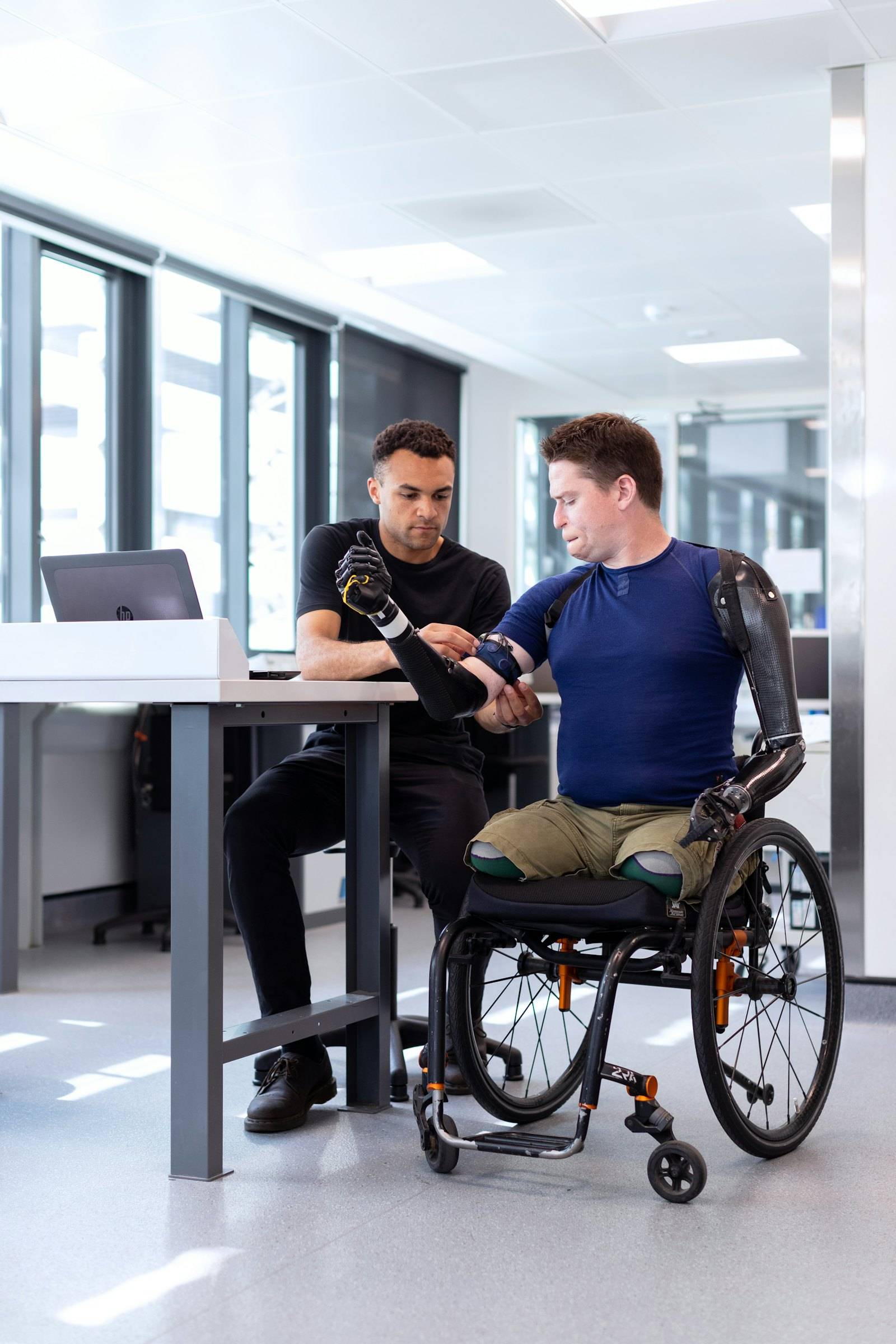
This department connects physiotherapy with public health and the community, an area the national curriculum treats as vital for rural India. Students learn to apply their clinical skills to preventing disability, community-based rehabilitation (CBR) and outreach in primary healthcare: screening for and evaluating disability, prescribing and making low-cost assistive devices from local materials, recommending home and architectural changes, and running health education programmes. The department also covers geriatric physiotherapy, oncology and palliative care, yoga and wellness, and occupational health and ergonomics. For a college in Kudligi, in Vijayanagara district, this teaching has direct local relevance.
Subjects we teach
BPT-110Clinic Orientation & VisitYear 1 · Field / Clinical · 150 hours · coordinated by the departmentVisits along the whole chain of healthcare delivery, from sub-centre, PHC and CHC to the district hospital, medical college and private sector, and meetings with the village panchayat and front-line health workers.
BPT-203Public Health & Health PromotionYear 2 · Theory · 120 hoursDeterminants of health, national health policy and programmes, levels of prevention, basic epidemiology, prevention of communicable and non-communicable diseases, and health education.
BPT-208Yoga & Systems of Medicine (AYUSH)Year 2 · Theory + Practical · 180 hoursThe philosophy and history of yoga, the Pancha kosha concept, stress management, the effects of kriyas, asanas, pranayama and meditation, and performing basic asanas and pranayama correctly.
BPT-304PT in Adult & Paediatric Medical and Surgical Conditions (units)Year 3 · Theory + Practical · shared with other departmentsUnits on oncology and palliative care, geriatrics, health and fitness promotion, and paediatric CBR.
BPT-407Community Physiotherapy & RehabilitationYear 4 · Theory + Practical · 120 hoursCBR, the epidemiology of disability, the rehabilitation team, disability evaluation, orthotics, prosthetics and assistive devices, ADL, vocational rehabilitation, architectural barriers, and occupational health and ergonomics.
What you will learn
- Screen for and evaluate disability in rural and urban settings using Government of India guidelines, and plan CBR programmes
- Prescribe and make low-cost assistive aids from locally available materials, and assess orthoses, prostheses and assistive technology
- Train patients in activities of daily living, wheelchair use, bed mobility, transfers and walking, and recommend changes to remove architectural barriers
- Plan vocational and social rehabilitation and work as part of the rehabilitation team
- Plan and deliver community health education on disability awareness, prevention and care
- Carry out ergonomic evaluation of workplaces and manage occupational injuries and stress
- Carry out geriatric assessment, including falls
- Perform basic asanas and pranayama and apply yoga for health promotion
Conditions & clinical areas
Disability & rehabilitation
- Locomotor disability
- Intellectual disability
- Speech and hearing disorders
- Visual disability
- PWD Act 1995
- Rights of Persons with Disabilities Act 2016
- National Trust Act
Geriatrics
- Normal ageing
- Falls
- Dementia
- Nutrition in the elderly
Oncology & palliative care
- Breast cancer
- Head and neck cancer
- Lung cancer
- Oral cancer
- Bone cancer
- Lymphoedema management
Occupational health & ergonomics
- Physical, chemical and mechanical hazards
- Overuse and fatigue injuries
- Sedentary workers
- Drivers
- People who stand all day
- Surgeons
- Defence personnel
- Manual labourers
Public health
- Communicable diseases
- Non-communicable diseases
- Levels of prevention
- National health programmes
Women's health (antenatal and postnatal care, pelvic floor training and gynaecological conditions) is also part of community outreach, and is taught in detail by our Paediatric & Women's Health Physiotherapy unit.
Field work
Field work is central to this department. The BPT-407 practicals, as described in the national curriculum, include:
PHC and rehabilitation centre visits
Field visits to urban and rural primary health centres and regional rehabilitation training centres.
Mobile camps and disability surveys
Regular mobile camps, with disability surveys and screening in villages.
Evaluation and prescription in the community
Demonstrations of evaluation and physiotherapy prescription for musculoskeletal, neuromuscular, cardio-respiratory, paediatric, gynaecological and geriatric problems in the community.
Assistive devices
Prescribing ambulatory and assistive devices, and making low-cost devices from locally available materials.
Community education
Community education programmes on health and disability, planned and delivered by students.
Laboratory
The community physiotherapy laboratory is equipped in line with the NCAHP minimum standards for outreach and screening. Its portable equipment lets students run health camps and awareness programmes away from the campus, and the norms provide for a dedicated vehicle to take students, interns and staff on community visits.
- Adult weighing machines
- Baby weighing machines
- Height-measuring stands
- Skinfold calipers
- Goniometers
- Body composition analysers
- Portable couches, tables and chairs
- First aid kits
- Multimedia projectors
- Portable public-address system
- Vehicle for community visits
Clinical postings
In the fourth-year Clinical Rotation (BPT-409), the department leads three postings: Community (PHC), Geriatric (old age homes) and Industrial visits for ergonomics. Under the NCAHP norms, a college also opens a community or extension centre in a nearby rural or semi-urban area, in addition to its campus OPD.
Internship: Community Physiotherapy / Rural posting, 2 months. The rural posting is preferably in a government setting such as a CHC, PHC or Rural Rehabilitation Centre, and is coordinated by the State Council. The training goal is the assessment and treatment of common community conditions in primary health care, with community involvement. About the internship.
Career & higher study
Community physiotherapists work in community-based rehabilitation, primary health centres, senior citizen centres, hospices and palliative care, occupational health centres and workplaces, and disaster management and relief. The national handbook recommends posting physiotherapists at government PHCs to screen school children and rural populations, and describes ergonomics programmes for workers and computer users.
MPT in Community Rehabilitation
A two-year specialty under the national curriculum that builds on BPT-407.
MPT in Oncology Science
For graduates drawn to cancer rehabilitation and palliative care.
RCP offers the BPT only. These MPT specialties are described as pathways after graduation. See Courses Offered.
Faculty
The department is staffed as per NCAHP faculty norms, with physiotherapy faculty holding a BPT and an MPT. Under the norms, subjects such as geriatrics and prosthetics & orthotics are taught by teachers with a postgraduate qualification in the specialty. Meet our faculty.
Take physiotherapy to the village
Learn to screen, treat and educate in the communities that need physiotherapists most. Enquire about BPT admissions for 2026–27.